

What we do
Practical tools, training, and systems that turn care into measurable outcomes.
Improving animal welfare doesn’t come from policies alone. It comes from people, culture, and systems working together.
Impetus helps organisations build the capability, confidence, and insight needed to deliver consistent, high quality animal care, every day, in real world environments.
We focus on three interconnected pillars:
Build the skills and confidence that good animal care depends on.
We support companies, industry groups, trainers to build adopt training systems that are a validated, practical approach to developing and assessing staff competence, including those working in high risk, high pressure environments.
What VTS provides:
Evidence based training frameworks
Competency standards aligned to real welfare tasks
Sensor enabled and physical training tools
Video-based assessment and verification
Independent oversight and credentialing
Reduced reliance on live animals for training (More ethical Replace principle of 3Rs)
Clear pathways for internal staff validation, re-assessment, and continuous improvement
Outcome:
Teams who know how to care well, can demonstrate they can do it, and receive ongoing support as skills evolve.

Understand what shapes welfare outcomes - and where to go next.
Welfare outcomes depend on more than handling technique. They’re shaped by workplace culture, leadership, systems, pressures, and shared beliefs.
Our Culture of Care Assessment gives organisations a structured, evidence-based way to evaluate:
Staff capability and confidence
Leadership expectations and support
Attitudes, welfare priorities, and communication
Operational systems and workflow pressures
Ethical reasoning and decision-making
Welfare risks and gaps
Interventions likely to drive positive change
You receive a clear, actionable roadmap tailored to your site or organisation.
Outcome:
A stronger, safer, more welfare aligned culture where people feel supported and equipped to do the right thing.
See what’s happening sooner. Improve welfare with better information.
We develop and validate practical monitoring tools that make welfare visible — supporting better decisions, early intervention, and more consistent standards.
Our technology work includes:
Sensor-based behaviour monitoring
Automated detection of welfare indicators
Integration with existing CCTV or QA systems
Real-time and historical reporting
Tools that complement, not replace, frontline expertise
On-site pilots to validate accuracy and effectiveness
Unlike traditional short-form manual audits, continuous digital signals help organisations understand what happens when staff aren’t being observed and support meaningful, ongoing improvement.
Outcome:
Better awareness, earlier action, and more consistent welfare performance.
Our Actual Work
-
We have deployed commercial AI systems into two abattoirs in Australia. One cattle abattoir and one mixed small stock (sheep, goat, calf) abattoir.
Impact: One abattoir implemented significant structural changes to the facliity including changes to drafting and restraint setups.
Future Impact: The incident management database within the system should improve record keeping and demonstration of change.
The system has the capability of also being implemented in pig abattoirs, especially to monitor handling from staff and where interventions would be most valuable.
-
Cedar Meats in Victoria were impacted heavily by reports by activists and hidden cameras from The Transparency Project.
We meet on a weekly basis to discuss issues in the facility, provide guidence on procedures and to support behaviour change.
“The changes we have implemented have been fundamentally supported by the expertise and dedication of Michael Patching and the team at Impetus since they began working with us last year. Their contributions have been instrumental in helping us firstly recognise the significant cultural challenges that we faced regarding animal welfare, as well as guiding us through the process of transforming that culture.”
- Craig Peacock (GM)
-
We have been working with WOAH (formerly the OIE) to develop a self-assessment and monitoring tool that enables member countries to evaluate their implementation of WOAH standards for animal transport.
Our team has been leading efforts to review the methodological approach, refine the assessment questionnaire, and design a data analysis framework that supports evidence-based insights, gap identification, and progress tracking for veterinary authorities across Europe.
-
We are working with Livecorp on their open innovation pipeline.
This involves and Agile process to understand key problems in the supply chain and bring commercial solutions through the journey to viable solutions.
The work has just begun so watch this space for impact.
-
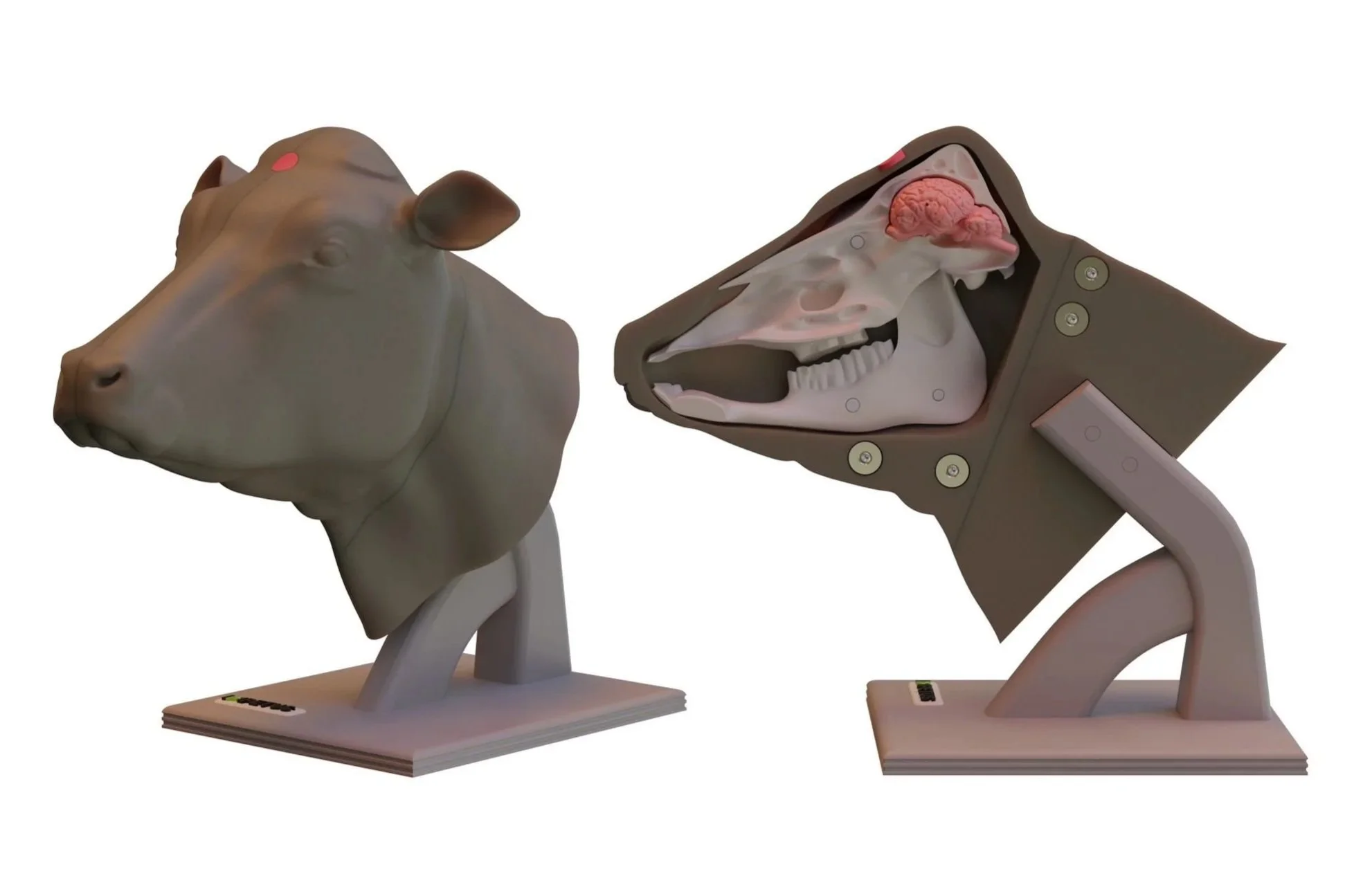
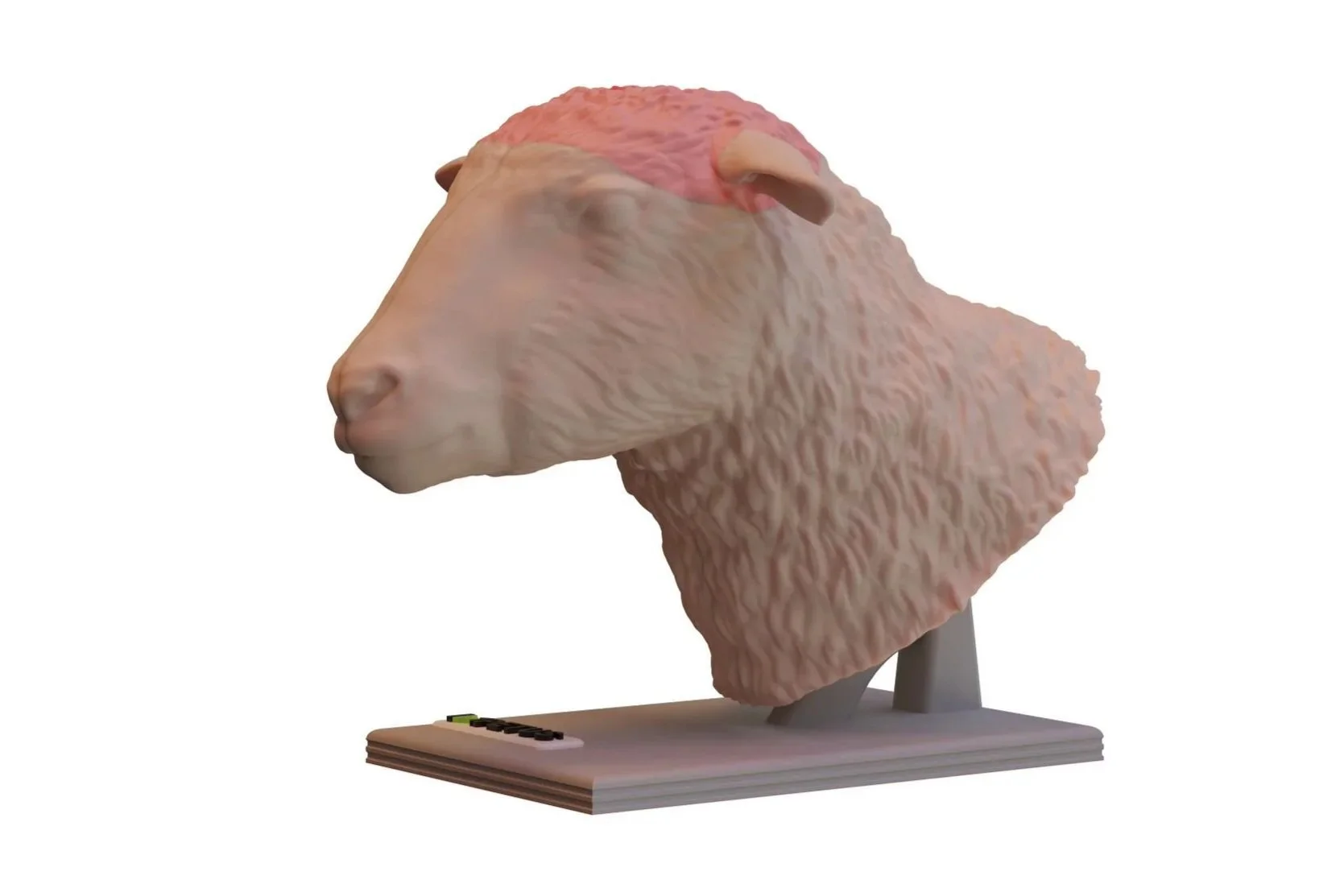
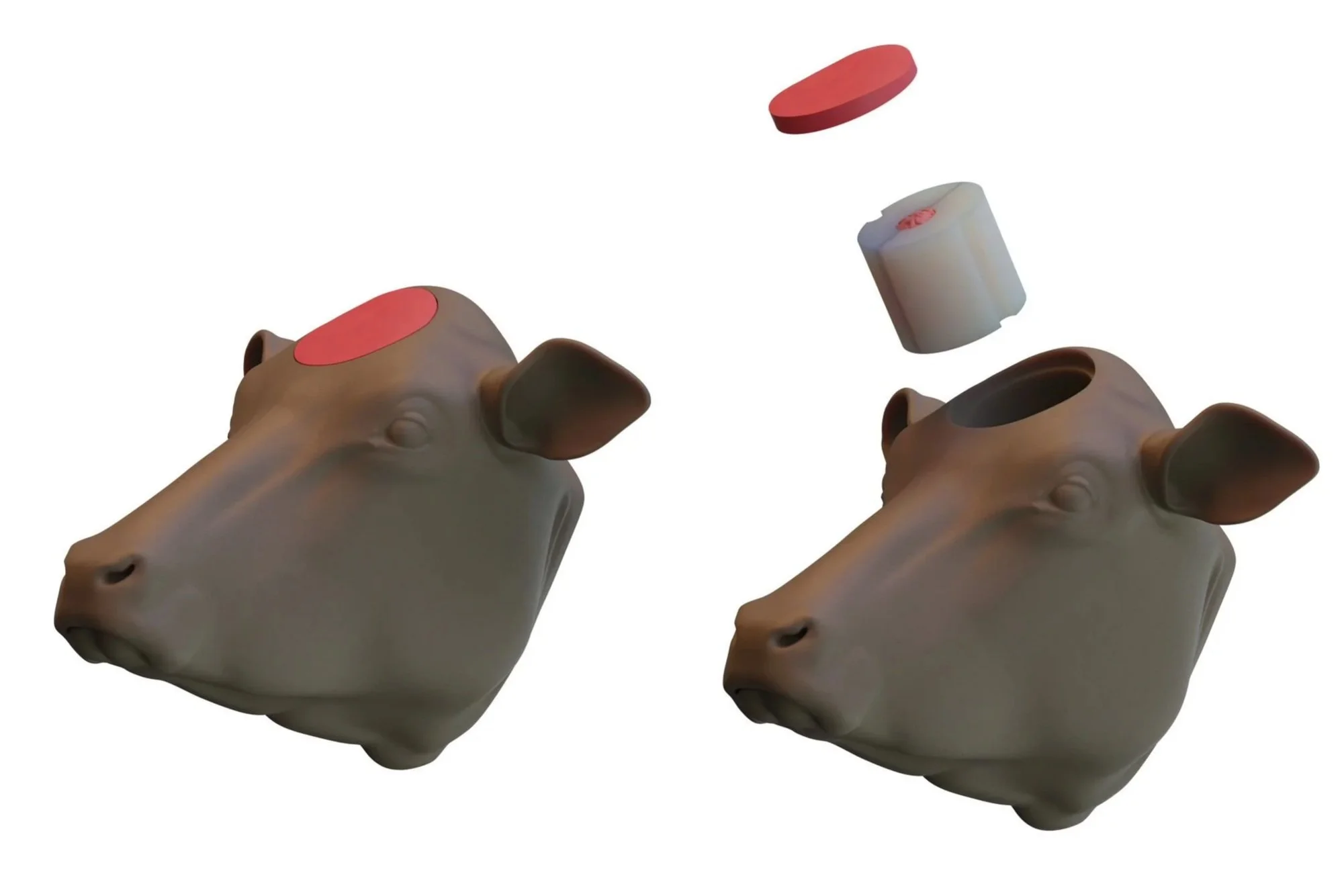
Impetus Animal Welfare is proud to have supplied several 3D printed model cattle heads to Murdoch University’s veterinary school, providing vital hands-on training for 3rd-year students in the use of captive bolt devices. This initiative offers a unique and essential exposure to captive bolt application—an experience many production animal veterinarians wish they had before entering practice.
The training has already yielded valuable insights, and we look forward to enhancing their skills further with the integration of a innovative new sensor version of the device.
This program not only benefits veterinary students but also creates a crucial training opportunity for abattoirs, government agencies, researchers, and farms—allowing them to maintain proficiency in this important procedure, even if required only periodically, ensuring it’s always performed with precision and care.
Research Opportunities
-
Our Research Strategy focuses on Farm Animals and is designed to be Impact measured and applied.
Our focus areas are currently in the abattoir and during transport for all species.
In abattoirs we are interested in AI monitoring, alternative stunning technologies or improved application of existing technology to improve re-stun rates, improve stunning options for halal slaughter and for non-gas stunning of pigs.
Transport is a key element of the supply chain and is a neglected intermediary that can improve outcomes for fit-for-journey (load) and performance of livestock in general. With an impact lens (what can we change and for how much) we invest in research that can improve performance before, during, and after the journey.
-
What if we could accurately quantify animal pain and welfare states, both before and after interventions, across supply chains?
Aim: To establish welfare baselines, enable benchmarking, and provide a foundation for metric-driven research and potential industry innovations such as “welfare credits.”
-
What if animals could move through facilities with minimal or no stress?
Aim: To empirically assess animal behaviour and flow, enabling development of data-driven facility design standards for animal welfare improvement at scale.
-
What if all stunning and handling methods were both highly effective and had no adverse impact on welfare or product quality?
Aim: To develop, test, and optimise new and existing methods for stunning and handling, including species-specific engineering and anatomical solutions.
-
What if husbandry procedures could be redesigned to eliminate or drastically reduce the need for animals to experience pain?
Aim: To address the causes of pain in common practices, test alternatives, and drive adoption of less invasive and more humane methods.
-
What if we had farming practices and abattoirs that people were proud of, where society recognised their importance, slaughtermen and workers were not demonised, the work attracted higher income and quality people, there was no PTSD—or effective mechanisms to address it when it occurred—and, ultimately, livestock were looked after better because of it?
Aim: To explore and demonstrate the mutual benefits of improved animal welfare for the wellbeing, mental health, status, and professional pride of people working in animal industries, and to develop strategies and mechanisms for positive human outcomes as part of holistic animal welfare reform.
-
Projects initiated or requested by external partners, including government, industry, or commercial entities. These projects may not always fully align with Impetus’s internal strategic priorities but are consistent with the broader mission and ethical standards of the organisation.
Purpose:
To address specific questions or needs identified by external partners. These projects must serve the wider goal of improving animal welfare, maintain independence and scientific integrity, and not conflict with Impetus’s mission or values.Funding:
Commissioned research is fully funded by the external partner, under clearly defined contractual or partnership agreements. These funds are strictly separated from donor or internal funds.Standards:
All externally funded projects:Are reviewed by the Research Committee for ethical and mission consistency.
Uphold scientific rigor, independence, and transparency (with consideration of confidentiality, where required).
Aim, wherever possible, to contribute insights or advancements that support Impetus’s wider mission.
Contact us
Interested in working together? Fill out some info and we will be in touch shortly. We can’t wait to hear from you!